




Every SaaS leader is being told to move faster. Adopt AI. Reinvent the product. Rethink the business model. Improve efficiency. Transform the organisation before competitors do it first. The pressure is relentless, and the assumption is that speed is the only reasonable response.
But there’s a problem. The faster leaders try to push change through an organisation, the more resistance they often encounter. Employees question decisions, teams struggle to align and initiatives that looked straightforward in the leadership meeting become complicated the moment they’re introduced to the wider company.
The natural conclusion is that people don’t like change.
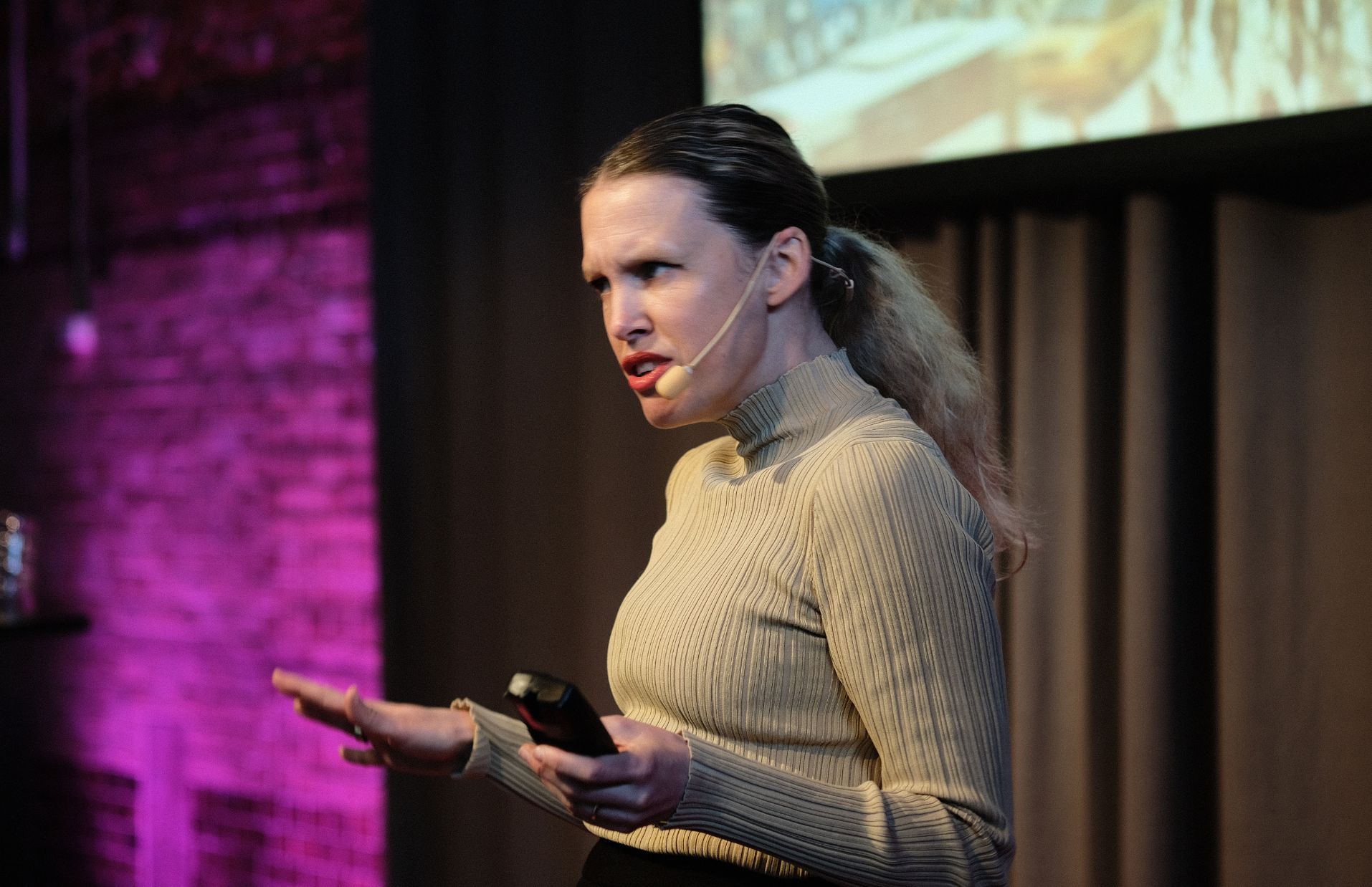
At SaaSiest 2026, Anna Gullstrand, Chief People & Culture Officer at Mentimeter, challenged that assumption. Her argument was that resistance isn’t simply an inevitable consequence of transformation. It’s often a response to the way leaders introduce and manage it.
And in a world where uncertainty is becoming a permanent feature of business, that distinction matters more than ever.
The Leadership Response to Uncertainty Is Often the Problem
When an organisation faces disruption, leadership tends to feel the pressure first. The board wants answers, competitors are moving quickly and customers are developing new expectations. Executives know they need to act, even when the right course of action isn’t entirely clear.
That pressure often produces a predictable response. Leaders become more directive, decisions are centralised and communication shifts from discussion towards instruction. The organisation is told what needs to happen, how quickly it needs to happen and why everyone needs to get on board.
From the leadership team’s perspective, this feels like decisive action. From an employee’s perspective, it can feel like losing control over their work and their future.
Anna argued that this is where resistance begins. The problem isn’t necessarily that employees disagree with the destination. It’s that the process of getting there makes them feel threatened, excluded or uncertain about their place in the organisation.
The irony is that the behaviour leaders adopt to accelerate change can become the very thing that slows it down. More pressure creates more defensiveness, and greater control can reduce the commitment needed to make transformation successful.
Change Is a Human Problem Before It’s an Operational One
Anna introduced a framework built around five fundamental human needs: status, certainty, autonomy, relatedness and fairness.
These needs influence how people respond to their environment, particularly when something important is changing. Status is about feeling valued and understanding your place in a group. Certainty is the desire to understand what is happening and what comes next. Autonomy is the ability to make choices and influence outcomes. Relatedness is the feeling of belonging and being safe within a group. Fairness is the expectation that decisions and treatment will be reasonable and equitable.
When these needs are supported, people are more likely to approach change with curiosity, engagement and a willingness to contribute. When they feel threatened, the opposite can happen. People become defensive, withdraw from discussions or actively challenge the direction being proposed.
Consider what happens when a SaaS company announces a major AI transformation. Employees may wonder whether their expertise will remain valuable, whether their roles will change, who will make the decisions and whether the consequences will be distributed fairly.
Even if the strategy makes perfect business sense, those concerns don’t disappear simply because leadership explains the commercial rationale.
Anna’s point was that leaders need to understand the human experience of change rather than treating resistance as an obstacle to be overcome. A transformation can be strategically necessary and still be introduced in a way that makes people reluctant to support it.
You Can’t Remove Uncertainty, but You Can Create Clarity
One of the most difficult aspects of leading through AI disruption is that nobody can confidently predict what the next few years will look like. Technology is evolving rapidly, business models are being challenged and many organisations are experimenting with approaches that have no established playbook.
Employees want certainty, but leaders cannot honestly provide it.
Anna argued that the solution isn’t to pretend the future is more predictable than it is. Instead, leaders should become much clearer about the things they can control.
That begins with direction. Even when the exact solution remains unknown, employees need to understand what the organisation is trying to achieve, which customers it serves and what outcomes matter most.
For SaaS companies, this becomes particularly important as AI increases the volume of work that teams can produce. More code, more content and more experiments don’t automatically translate into better results. Without a shared understanding of customer needs and strategic priorities, greater output can simply create more noise.
The second source of clarity is the process itself. If leadership cannot explain exactly what the future product, organisation or operating model will look like, it can still explain how those decisions will be made.
Who will participate? How will alternatives be evaluated? What information will guide the decision? When will the organisation review progress?
Anna’s argument was that when the destination is uncertain, a clear process can provide the stability people need to keep moving.
Transparency Matters Most When You Don’t Have the Answers
Uncertainty often makes leaders more cautious about communication. They worry that sharing incomplete information will create anxiety, that admitting uncertainty will undermine confidence or that opening difficult conversations will generate more questions than they can answer.
The result is frequently less communication at precisely the moment employees need more of it.
Anna recommended the opposite approach. Make information accessible, create opportunities for questions and allow people to challenge assumptions. Regular Q&A sessions, open discussions and opportunities to speak directly with leadership can help reduce the uncertainty that fuels resistance.
This also requires executives to become comfortable admitting what they don’t know.
A leader who acknowledges an unanswered question, welcomes a different perspective or invites employees to help develop a solution can create more trust than one who insists on projecting complete confidence.
The important distinction is between uncertainty and secrecy. Employees may accept that the organisation doesn’t yet know exactly how AI will reshape its business. What is harder to accept is the feeling that important decisions are being made behind closed doors without their involvement.
Transparency cannot eliminate every concern, but it can make the organisation feel less unpredictable and give employees greater confidence in how decisions are being made.
People Support What They Help Create
Perhaps the most important idea in Anna’s session was that involvement changes how people experience transformation.
When leaders develop a strategy in isolation and then present it to the organisation, employees are effectively being asked to accept someone else’s solution. Even if the strategy is sound, they may question the assumptions, disagree with the priorities or struggle to understand how it relates to their own work.
But when employees participate in shaping the approach, something changes. They gain context, contribute expertise and develop a sense of ownership over the outcome.
Anna argued that this is why co-creation can be so effective. It supports autonomy by giving people influence over decisions that affect them, while also strengthening their connection to the organisation and its direction.
At Mentimeter, this philosophy is reflected in how the company engages employees around strategy and business priorities. Rather than assuming everyone understands the goals, the organisation actively checks whether people can connect their work to those goals and understand the value the company is trying to deliver to customers.
The company also examines how closely employees are connected to customers. Anna shared an internal example showing that 66 employees had reported no direct customer interactions during the period being measured, including people working in the product organisation.
For a company trying to maintain customer focus while navigating change, that represents an important gap. Understanding customers cannot remain the exclusive responsibility of Sales or Customer Success if the wider organisation is expected to make better decisions.
The underlying principle is that alignment shouldn’t be assumed simply because a strategy has been communicated. Leaders need to find out whether people understand it, believe in it and have the information necessary to act on it.
Moving Faster Might Require Slowing Down First
One of the questions Anna received after her presentation addressed the obvious objection to this approach.
What if the company doesn’t have time for all these conversations?
When markets are changing quickly and leadership is under pressure to act, involving more people can seem inefficient. It’s tempting to gather the executive team, make the decision and communicate it as quickly as possible.
Anna argued that this approach often creates an illusion of speed.
The leadership team may reach a decision quickly, but implementation becomes slower because the wider organisation hasn’t been part of the thinking. People question the direction, misunderstand the priorities or resist decisions they don’t feel connected to. Time that was saved during planning gets lost during execution.
By contrast, investing more time upfront to involve relevant experts, managers and employees can create stronger alignment before a change is formally launched.
The process may initially take longer, but implementation can become significantly smoother because people already understand the reasoning and feel some ownership of the outcome.
For SaaS companies, this challenges the instinct to measure transformation speed by how quickly leadership announces a new initiative.
The more useful measure is how quickly the organisation can turn that decision into coordinated action.
Sometimes the fastest route to meaningful change is to spend more time preparing people for it.
AI Transformation Will Test Leadership More Than Technology
The discussion around AI transformation is often dominated by tools, models, productivity gains and new operating structures. Companies are experimenting with agents, changing engineering workflows and reconsidering how many people are needed to perform particular tasks.
But the human consequences of those decisions are substantial.
Employees are being asked to learn new skills, reconsider established ways of working and adapt to changes that may directly affect their professional identity. Some will see enormous opportunities. Others will worry about whether their experience and contributions will still matter.
Anna’s framework suggests that successful transformation depends on how leaders respond to those concerns.
Do employees feel that their expertise is still valued? Do they understand the direction, even when the details remain uncertain? Can they influence how changes affect their work? Do they feel included in the organisation’s future? And do they believe decisions are being made fairly?
These aren’t separate questions from the transformation strategy. They are part of what determines whether that strategy can be implemented.
A company can invest heavily in AI tools and develop an ambitious roadmap, but if its people feel threatened, excluded or disconnected from the process, execution will suffer.
The organisations that adapt most effectively may not be those that apply the greatest pressure. They may be those that create the conditions for employees to participate in change rather than defend themselves against it.
The Real Leadership Advantage Is Creating Progress Without Panic
SaaS leaders cannot control the speed of technological disruption. They cannot eliminate market uncertainty or guarantee that today’s strategy will remain relevant tomorrow.
What they can control is how their organisations respond.
They can provide direction when the destination is unclear, create transparent processes when decisions are difficult and involve employees in shaping the changes that affect them. They can make room for questions, acknowledge uncertainty and build the trust required to move forward together.
Anna’s central challenge to leaders was to reconsider what resistance actually means. Instead of immediately assuming that employees are unwilling to change, ask whether the way change is being led is threatening the very human needs that make people willing to engage.
That doesn’t mean every employee will agree with every decision or that difficult changes can always be made painless. It means leadership has a much greater influence over the response than it sometimes acknowledges.
In a world where uncertainty is accelerating, the ability to create clarity, trust and shared ownership becomes a competitive advantage.
The best leaders won’t be the ones who push their organisations through change the hardest. They’ll be the ones who make people want to move forward together.