






SaaS founders are taught to obsess over market size.
Investors want enormous TAMs. Founders build decks showing billion-dollar opportunities. The bigger the market, the bigger the potential company. And if your market looks small, the natural response is usually to find ways to make it sound bigger.
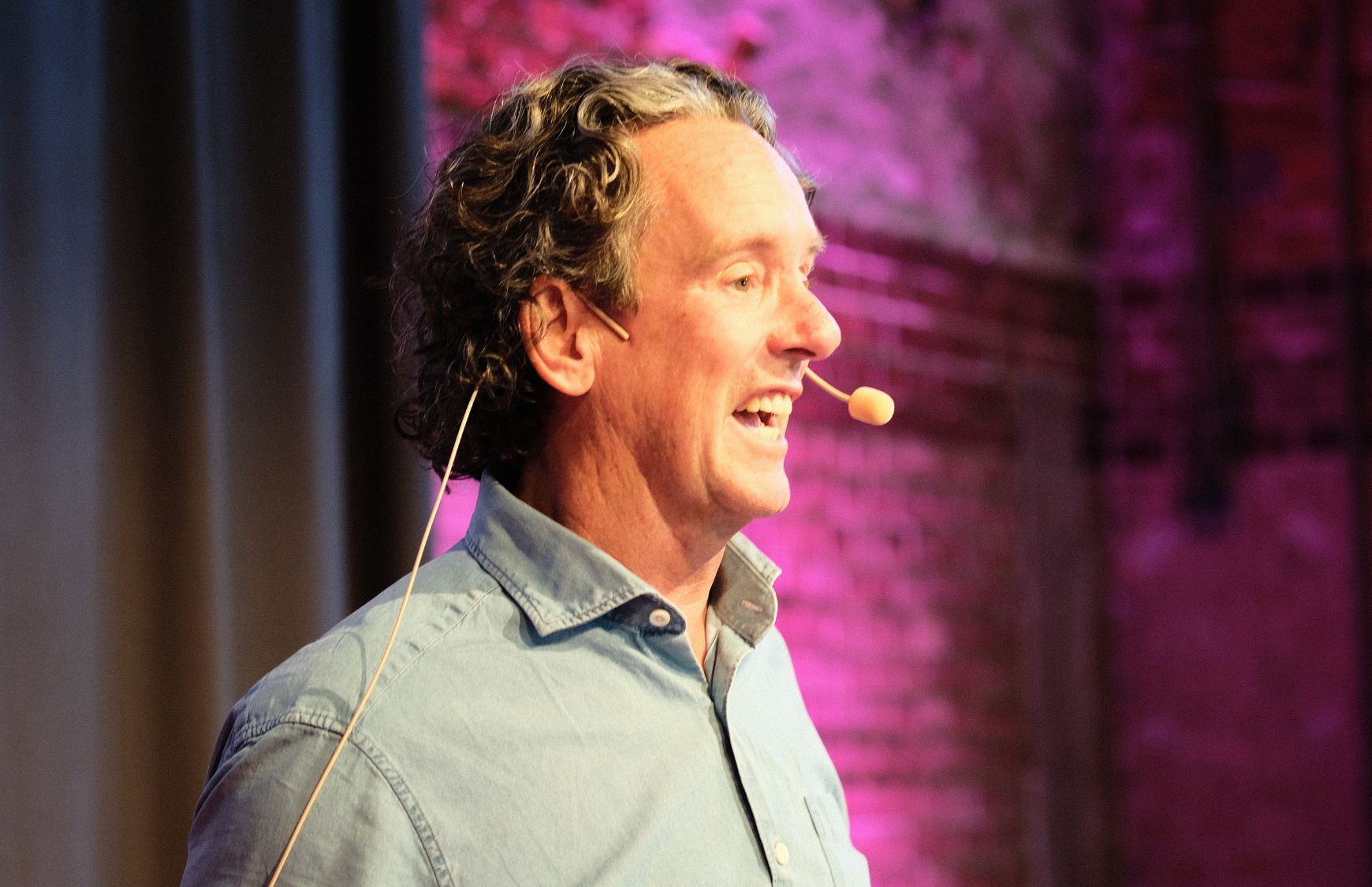
At SaaSiest 2026, Oliver King, CEO of Avinode Group, made the case for looking at the equation differently.
Avinode operates in private aviation, serving a market of roughly 8,000 aircraft available for charter worldwide. The company has been around for 24 years, has approximately 2,500 customers, and has built a $45 million business in a market that would look surprisingly small on most venture capital slides.
Yet Avinode was sold around two years ago for $250 million.
Oliver’s argument was that smaller markets can create incredibly strong SaaS companies – but only if you understand what makes a niche different.
In a Niche, Reputation Becomes Your Growth Engine
The first thing that changes in a small market is surprisingly simple.
Everyone talks.
Customers know each other. Employees move between competitors. People meet at the same conferences. Buyers compare products, pricing, and experiences with their peers.
That creates a very different environment from a huge market where losing one customer can simply be compensated for by acquiring another.
In a niche, you don’t get unlimited second chances.
Oliver described reputation as the real growth engine of a niche SaaS company. A great customer experience doesn’t stay with one account. It travels through the market. Unfortunately, the same thing happens when you get something wrong.
That changes how you need to think about growth. Your next customer may already have formed an opinion about you before your salesperson enters the room.
You Can’t Outrun a Bad Customer Experience
Oliver shared an example from Avinode’s own product development.
The company released several new features it was proud of, but shortly afterwards experienced a 42-minute outage. For a platform facilitating bookings between businesses in private aviation, 42 minutes was significant.
What did customers talk about afterwards?
Not the new features.
The outage.
In a larger market, that experience might remain relatively isolated. In a tightly connected niche, it spreads.
That’s why reliability becomes more than an engineering metric. It becomes part of your go-to-market strategy.
Every interaction contributes to the reputation that precedes your next sales conversation. And when the number of potential customers is finite, you can’t simply acquire your way out of a damaged reputation.
Growth Has to Come From the Customers You Already Have
Small markets also force companies to rethink one of the most common assumptions in SaaS.
There isn’t always another logo.
People joining Avinode from larger SaaS businesses sometimes need time to adjust to this reality. The company can’t simply build a bigger outbound machine and continuously feed new accounts into the funnel because there aren’t enough potential customers for that model to work indefinitely.
Instead, growth has to come from going deeper.
That means increasing the value delivered to existing customers, expanding relationships over time and building products that become increasingly embedded in how an industry operates.
In Avinode’s case, that is particularly powerful because it operates as both a SaaS company and a marketplace. The more interactions that happen between operators and brokers on the platform, the more valuable and difficult to replace the product becomes.
In a niche, retention and expansion aren’t supporting metrics.
They’re the growth model.
Your Customers Know More Than You Think
The closeness of a niche also creates another uncomfortable reality for SaaS companies.
Customers compare notes.
Oliver recalled visiting a location with four Avinode customers. Within minutes of beginning negotiations with one of them, the customer told him exactly what the other three were paying.
The contracts may say pricing is confidential.
The market has other ideas.
The same transparency applies to the product itself. Customers quickly discover gaps, share workarounds and teach each other how to solve problems outside your platform.
That means inconsistencies become increasingly difficult to hide.
In a large market, different customers can sometimes experience entirely different versions of your company without ever knowing it. In a niche, those experiences collide.
Your pricing, product, service and reputation effectively become one thing.
The Best Sales Call May Happen Without You
One of Oliver’s stories illustrated just how powerful this dynamic can become.
Avinode was pursuing a major customer in the US and had prepared extensively for the sales conversation. Within the first couple of minutes, the team discovered that the prospect had already spoken with three existing Avinode customers.
The decision had largely been made before the meeting started.
That can work in both directions.
If your reputation is strong, customers effectively become part of your sales organisation. If it isn’t, sales teams spend their time overcoming objections created by conversations they weren’t part of.
This is why Oliver argued that founders evaluating markets should look beyond TAM.
The better question is:
How connected is the market?
Do customers talk to one another? Does reputation travel? Do relationships overlap? Can trust compound across the industry?
If the answer is yes, a relatively small market can behave very differently from what its size suggests.
Saying No Becomes a Competitive Advantage
There is, of course, a trade-off.
Niche SaaS companies often have to say no to opportunities that look like obvious growth.
Oliver described Avinode’s decision about whether to expand from private passenger aviation into cargo. On paper, entering another market increased the opportunity available to the company.
They decided not to.
The danger was dilution.
When your advantage comes from understanding a market deeply, expanding too early can weaken the very thing that made the company successful.
That means growth can look less exciting from the outside. Avinode has typically grown around 14-18% annually rather than producing the explosive curves associated with hypergrowth SaaS.
But it has done so consistently for roughly two decades.
Compounding doesn’t always look impressive in a single year.
Over 20 years, it looks very different.
Small Markets Can Build Very Big Advantages
Perhaps the most useful takeaway from Oliver’s session is that founders should stop treating TAM as the only measure of market attractiveness.
A large market gives you more potential customers.
A connected market gives you something else.
Trust can compound. Network effects can strengthen. Customer acquisition can increasingly happen through reputation. Retention becomes stronger. Deep industry knowledge becomes harder for competitors to replicate.
The trade-off is that mistakes compound too.
You have to earn expansion. You have to protect reliability. You have to be transparent when things go wrong. And you have to accept that your reputation will travel through the market whether you control the conversation or not.
For founders looking at a niche and wondering whether it’s big enough, that creates a different way to think about the opportunity.
Don’t just ask how many customers exist.
Ask how much stronger your business becomes when all of them talk to each other.