
Most companies already have plenty of AI. Employees have ChatGPT. Engineering has Claude. Teams are experimenting with agents, copilots and dozens of specialised tools. New subscriptions appear every month, everyone shares impressive prompts in Slack, and leadership proudly talks about becoming AI-first.
But does any of that actually mean you have an AI strategy?
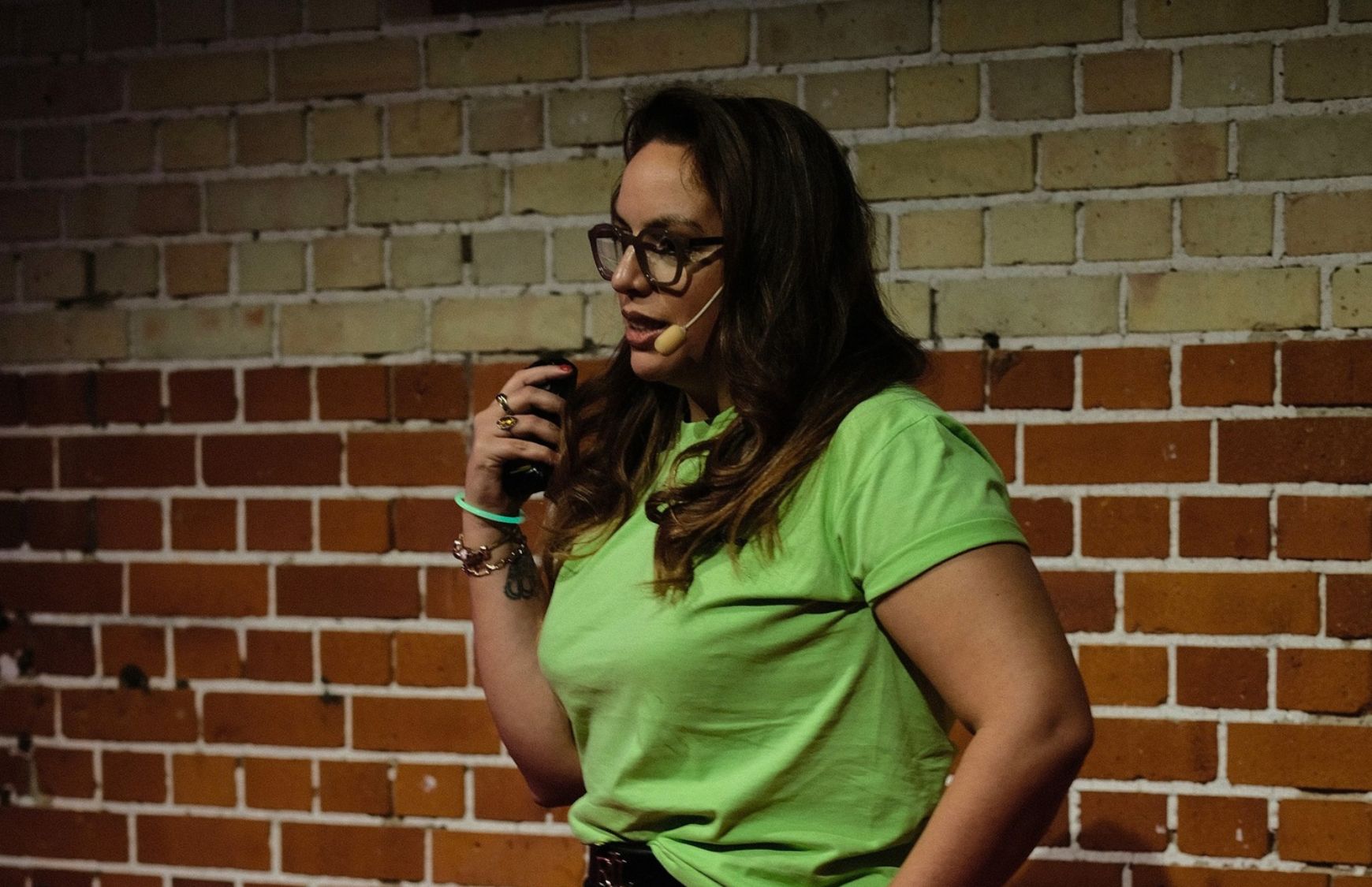
At SaaSiest 2026, Ines Lourenço, CPTO at Leadfeeder, argued that for most companies, the answer is no. Giving employees access to AI isn’t a strategy. The experimentation phase is ending, and simply having the latest models available is becoming table stakes. The companies that get meaningful leverage from AI will be the ones that stop treating it as a collection of tools and start building a system around it.
Ines calls that system an AI operating system. And interestingly, the model itself may be the least important part.
The Problem Isn’t AI Access Anymore
A year or two ago, access to powerful AI models could genuinely feel like an advantage. Today, almost everyone has it. That’s why Ines believes many companies are solving the wrong problem. They keep asking which model employees should use, which AI tool they should buy next or whether they should standardise on one provider.
But access isn’t the bottleneck anymore. The operating model is.
Ines’s own system is deliberately technology agnostic. Most of it consists of plain text files that can move between different AI tools. If one model performs better tomorrow, she can switch without rebuilding the entire system.
That’s an important distinction. If your AI strategy depends entirely on whether your company uses Claude, ChatGPT or whatever model launches next month, you haven’t really built a strategy.
You’ve chosen a vendor.
Context Is What Makes AI Actually Useful
The first layer of Ines’s operating system is also the one she believes most people underestimate: context. When someone opens an AI tool, types a prompt and gets a generic answer, the instinct is often to blame the model. In many cases, the problem isn’t the model. It’s everything the model doesn’t know.
It doesn’t know how you communicate. It doesn’t know your leadership principles. It doesn’t know what your CEO cares about, what was discussed in your last one-on-one, how your company talks about competitors or which strategic priorities matter this quarter.
Ines separates this into personal and organisational context. Her personal context includes things such as her voice, tone, leadership principles and stakeholder information. Organisational context includes strategy documents, customer insights, competitor information and terminology.
That turns generic AI into something much more useful. The same model suddenly starts behaving like it understands the company.
Stop Being the Middleware for Your AI
Context gives AI a brain, but a brain that can’t access anything is still limited. That’s why the second layer is connections.
Many executives still use AI by manually moving information between systems. Find something in Slack. Copy it into ChatGPT. Download a document. Upload it somewhere else. Copy the response back into another application. Ines’s advice was to stop being the middleware and instead connect AI directly to the systems where work already happens.
For an executive, that might mean communication tools such as Slack, email and calendars. It might mean product systems such as Figma, Linear and Notion, alongside analytics platforms, customer support systems, GitHub and Gong. Once those connections exist, AI no longer has to wait for someone to manually provide the information required for every task.
It can go and find the context itself.
If You Do It Twice a Month, Turn It Into a Skill
The third layer is where Ines believes productivity starts accelerating: skills. Her rule is straightforward. If you do something more than twice a month, it should probably become a skill.
Preparing a board update. Writing a PRD. Creating a competitive battlecard. Preparing for a one-on-one. Building a presentation. Producing a stakeholder update.
Instead of prompting AI from scratch every time, Ines encodes the process. A skill defines what information should go in, which sources should be used, what the output should look like, which tone it should follow and how the task should be completed.
Her SaaSiest presentation itself was an example. She gave the system the topic and framework she wanted to explain, and an existing skill generated the presentation, including the content and illustrations.
That’s fundamentally different from asking AI to “make me some slides.” The knowledge of how to perform the task becomes reusable. And once the process is reusable, it can spread across the organisation.
AI Without Memory Keeps Starting From Zero
Perhaps the most overlooked layer in Ines’s framework is memory. Without it, even a well-contextualised AI system repeatedly encounters the same problem: it forgets what happened.
You correct an output on Monday, then make the same correction on Thursday. You explain how a stakeholder prefers information presented, then explain it again next week. Every interaction begins with another version of the same briefing.
Ines described this as “Groundhog Day” for AI. Her solution is to become deliberate about what the system remembers. That includes information about the user, feedback from previous tasks, project information such as ownership and timelines, and references explaining where important information lives.
Feedback is particularly valuable. When someone corrects the AI, that correction shouldn’t disappear when the conversation ends. It should improve how the system performs the task next time.
That’s where AI begins to behave less like a tool you repeatedly instruct and more like a system that learns how your organisation works.
Automation Is Where the System Starts Working Without You
The final layer is automation, and this is where Ines said she began to feel like she had “cloned” herself.
Once the AI has context, access to company systems, reusable skills and memory, recurring work can start happening automatically. Every week, Ines has an agent analyse Leadfeeder’s competitors and produce competitive intelligence based specifically on the company’s strategy and roadmap. Another analyses customer calls, support tickets and other interactions to identify recurring frustrations. Another monitors competitor pricing pages for changes.
Before important one-on-ones, an automation reviews agendas, Slack conversations and previous context to prepare the meeting. She even has a daily CPTO briefing that identifies relevant product activity, flags delivery issues and creates follow-up tasks when something requires her attention.
None of these examples are particularly futuristic. That’s what makes them interesting. They’re ordinary executive tasks that no longer require an executive to initiate every step.
The Real Advantage Is Compounding
The five layers matter individually, but together they create something much more powerful. Context makes connections useful. Connections enable skills. Skills create repeatable work. Memory improves those skills. Automations run them continuously and generate new context.
The system becomes a loop.
And every time it runs, it gets a little better.
That’s the fundamental difference between using AI and operating on AI. Most people still start from zero every time they open a new chat. They write another prompt, provide another document and explain another piece of context.
A system compounds. The tenth board update should be better than the first because the system remembers the previous nine. The next competitive report should understand what mattered last week. The next one-on-one preparation should already know what happened in the previous conversation.
AI productivity stops being a collection of isolated time savings. It becomes organisational knowledge accumulating over time.
Your AI Strategy Should Survive Your AI Vendor
Perhaps the most important lesson from Ines’s session is that companies may be spending too much time debating which AI technology to choose.
Models will change. The best model today may not be the best model six months from now. New tools will appear. Existing vendors will improve. Capabilities that feel extraordinary today will become commodities.
The durable advantage is everything you build around them: your context, your connections, your skills, your memory and your automations. Those assets understand how your organisation actually works, and they become more valuable the longer you use them.
That’s why Ines doesn’t describe herself as having a Claude strategy. She has an executive operating system that happens to run on Claude today. Her closing message was to build the system rather than the habit, because the layers compound and allow the system to improve even when you’re not actively using it.
And that’s probably a useful distinction for every SaaS leader thinking about AI.
You don’t need another AI tool.
You need a system that gets better every time you use it.