
Growth is supposed to be a good thing.
More customers. More revenue. New markets. Bigger teams. Fresh funding. For most SaaS founders, these are the milestones they’ve spent years working towards. They signal that the company is moving in the right direction.
But somewhere along the way, something strange happens. Decisions that once took five minutes suddenly require five meetings. Teams that used to work naturally together start operating in silos. Priorities become less obvious, accountability gets blurry and leadership spends more time managing the business than actually leading it.
The company is growing, but running it is becoming harder.
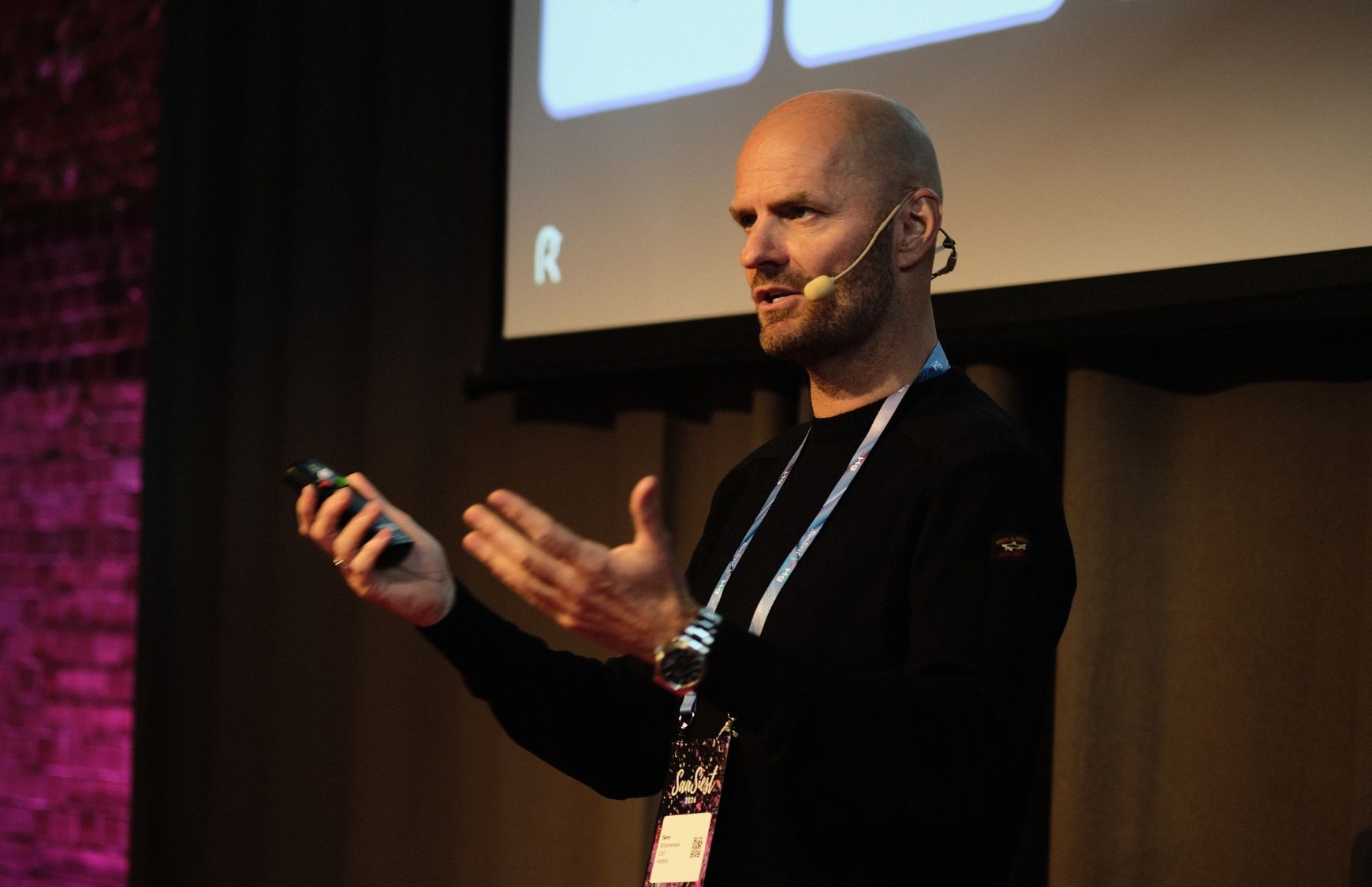
At SaaSiest 2026, Søren Schønnemann, CEO of Factbird, shared how his company experienced exactly this challenge. After spinning out from its parent company, expanding internationally and growing rapidly, Factbird discovered that its operating model was struggling to keep up with the business.
The problem wasn’t a lack of ambition, talent or market opportunity. It was that the company had outgrown the way it worked.
The Operating Model That Got You Here Won’t Get You There
In the early days of a SaaS company, coordination happens almost automatically. Everyone knows what everyone else is working on. The founders are involved in most decisions. Problems get solved through quick conversations, and priorities are often understood without needing to be documented.
That works remarkably well when you’re ten people sitting in the same room. It becomes much harder when you’re thirty, fifty or ninety people spread across different countries, departments and time zones.
Factbird experienced this transition while undergoing significant change. The company had spun out as an independent business, opened its first US office, expanded into several European markets and grown to serve more than 250 enterprise customers. It was also preparing for a €10 million growth investment.
Revenue was growing. The product was strong. The team was expanding. But internally, the cracks were beginning to appear.
Engineering, Sales and Marketing were all moving quickly, but not necessarily in the same direction. Different teams had developed their own ways of working, and the organisation lacked a common language for priorities, accountability and decision-making.
Søren described a company where the ambition was clear, but the operating model needed to catch up. What had previously worked through informal communication and good intentions was becoming increasingly difficult to sustain.
Complexity Grows Faster Than Headcount
One of the most important lessons from Factbird’s journey is that organisational complexity doesn’t increase in a straight line.
Adding ten employees doesn’t simply mean ten more people to manage. It creates new relationships, dependencies, communication channels and decisions. Add new markets, products and management layers, and that complexity accelerates even further.
At Factbird, Søren identified around fifty employees as the point where the existing way of operating could no longer support the company’s ambitions. The business wasn’t failing, but the organisation was approaching its limits.
This is a familiar challenge for growing SaaS companies. Founders often respond to increasing complexity by hiring more experienced leaders, introducing new management meetings or adding processes within individual departments.
But those solutions can create another problem. Each function becomes better organised internally while the company as a whole becomes less aligned.
Sales introduces one planning system. Engineering uses another. Marketing tracks different priorities. Leadership spends more time trying to connect the pieces.
The challenge is no longer whether individual teams are performing.
It’s whether the entire organisation is moving together.
Scaling Requires a Shared Language
Factbird’s response was to implement the Entrepreneurial Operating System, or EOS, a structured framework designed to help companies align their vision, people, data, processes and execution.
For Søren, the appeal wasn’t simply having another management methodology. It was creating one shared operating model that everyone could understand and follow.
The company needed a common plan, from long-term strategic objectives down to quarterly priorities. It needed consistent meeting rhythms, clearly assigned accountability and a structured way to surface and resolve problems before they became larger issues.
EOS gave Factbird a way to connect those elements.
The company introduced shared planning horizons covering its long-term vision, three-year objectives, annual plans and ninety-day priorities. It established weekly scorecards built around a focused set of KPIs, with individuals accountable for specific measurable outcomes.
It also introduced what EOS calls rocks: the most important priorities that teams and individuals commit to delivering over a ninety-day period.
The objective wasn’t to create more documentation or bureaucracy. It was to make sure that everyone understood what mattered, who owned it and how progress would be measured.
Instead of relying on individual managers to interpret the company’s strategy, the operating model created a consistent way to translate that strategy into action.
Accountability Only Works When Problems Can Be Discussed
One of the most interesting aspects of Factbird’s transformation was how it changed the way the company handled problems.
In many organisations, issues remain unresolved not because nobody knows they exist, but because there is no reliable mechanism for addressing them.
A problem appears in one department. Someone mentions it in a meeting. Another team promises to look into it. A few weeks later, the same problem resurfaces.
Eventually, these unresolved issues become part of how the company operates.
Factbird introduced a weekly meeting structure where teams review priorities, KPIs, outstanding commitments and issues that need to be resolved. Every issue is brought into the open, discussed and assigned a clear next step.
The results Søren shared were striking. Over twelve months, Factbird completed more than 1,050 assigned to-dos, finished 923 quarterly priorities and surfaced, discussed and resolved nearly 2,400 issues.
Those numbers don’t necessarily prove that every decision was correct. But they demonstrate something important: the company had created a repeatable mechanism for turning problems and priorities into action.
And that is often what growing organisations are missing.
Not more ideas. Not more meetings. Not more dashboards.
A reliable way to make sure important things actually get done.
A Better Operating Model Doesn’t Remove Complexity
By the time Factbird reached around ninety employees, its operating model had been rolled out across the organisation. The company had a shared planning structure, clearer accountability and a consistent management cadence.
But Søren was careful not to present this as a story where implementing a framework magically made the business simple.
Complexity didn’t disappear.
Factbird was still expanding, onboarding employees, entering markets and evolving its product offering. The company had also moved from a single-product business towards a platform model while changing its commercial approach.
What changed was its ability to manage that complexity.
During the period Søren described, Factbird continued growing at around 65% annually and onboarded 43 employees in a single year. New hires entered an organisation where expectations, responsibilities and planning rhythms were already established.
Instead of every new employee or department creating another variation of how the company worked, the operating model gave them a common foundation.
That’s an important distinction for SaaS leaders.
The goal of an operating model isn’t to eliminate complexity. It’s to make complexity manageable without requiring the founders to personally coordinate everything.
The Hardest Part Isn’t the Framework. It’s the Behaviour.
Implementing EOS at Factbird took approximately nine to twelve months and required dedicated internal resources. The company started with leadership alignment, introduced the framework into its own management routines and gradually expanded it across the organisation.
But Søren emphasised that the difficult part wasn’t learning the methodology.
It was changing people’s behaviour.
Experienced leaders already had ways of running their teams. Departments had established meeting structures, planning processes and management habits. Replacing those with a common system required people to give up practices they were comfortable with.
The framework also introduced a level of transparency that could initially feel uncomfortable.
When everyone has clear responsibilities and measurable outcomes, missed commitments become visible. When teams are expected to raise issues openly, difficult conversations can no longer be avoided.
That can create resistance, particularly in organisations where problems have traditionally been handled privately or accountability has remained informal.
But Søren argued that this discomfort is part of the value. Over time, transparency becomes less personal and more operational. Teams learn that discussing a missed target or unresolved issue isn’t about assigning blame. It’s about understanding what needs to change.
And that can create a different level of trust across the organisation.
A Great Operating Model Can Still Execute a Bad Strategy
There was one important warning in Søren’s presentation.
An operating system can make a company much better at execution. But it cannot tell the company what it should execute.
If the underlying strategy is weak, a highly disciplined operating model may simply help everyone move faster in the wrong direction.
That’s why strategic clarity has to come first.
Before introducing more accountability, better scorecards and tighter execution rhythms, leadership needs to answer the difficult questions about where the company is going, which markets it should prioritise and what it is trying to become.
Otherwise, operational alignment can create the illusion of progress while the company is pursuing the wrong objectives.
The second warning was directed squarely at founders and CEOs.
An operating model only works if leadership follows it too.
If the CEO regularly skips meetings, abandons quarterly priorities or treats the framework as something that applies to everyone else, the organisation notices. The rules quickly become optional, and the company gradually returns to its old habits.
For Søren, the operating model had to be non-negotiable, starting at the top.
The Real Scaling Challenge Is Learning to Run a Different Company
Factbird’s story illustrates a challenge that many SaaS founders eventually face.
The company you build to find product-market fit is not necessarily the company you need to scale internationally.
In the beginning, speed comes from proximity. Everyone knows the priorities, decisions happen informally and founders can personally keep the organisation aligned.
As the business grows, those advantages begin to disappear. More people, products, markets and customers create more complexity than informal coordination can handle.
At that point, scaling requires something different.
Shared priorities. Clear accountability. Consistent execution. A reliable way to surface problems. And a leadership team willing to operate within the same system as everyone else.
Factbird didn’t introduce an operating model because its business was failing. It introduced one because the business was succeeding, and the organisation needed to become capable of sustaining that success.
That’s perhaps the most important lesson.
Growth doesn’t automatically create a scalable company.
At some point, you have to redesign how the company runs so it can handle the growth you’ve worked so hard to achieve.