


For years, B2B marketing has been built around a simple assumption: if enough of the right people know your brand, sales can do the rest.
That assumption is starting to break.
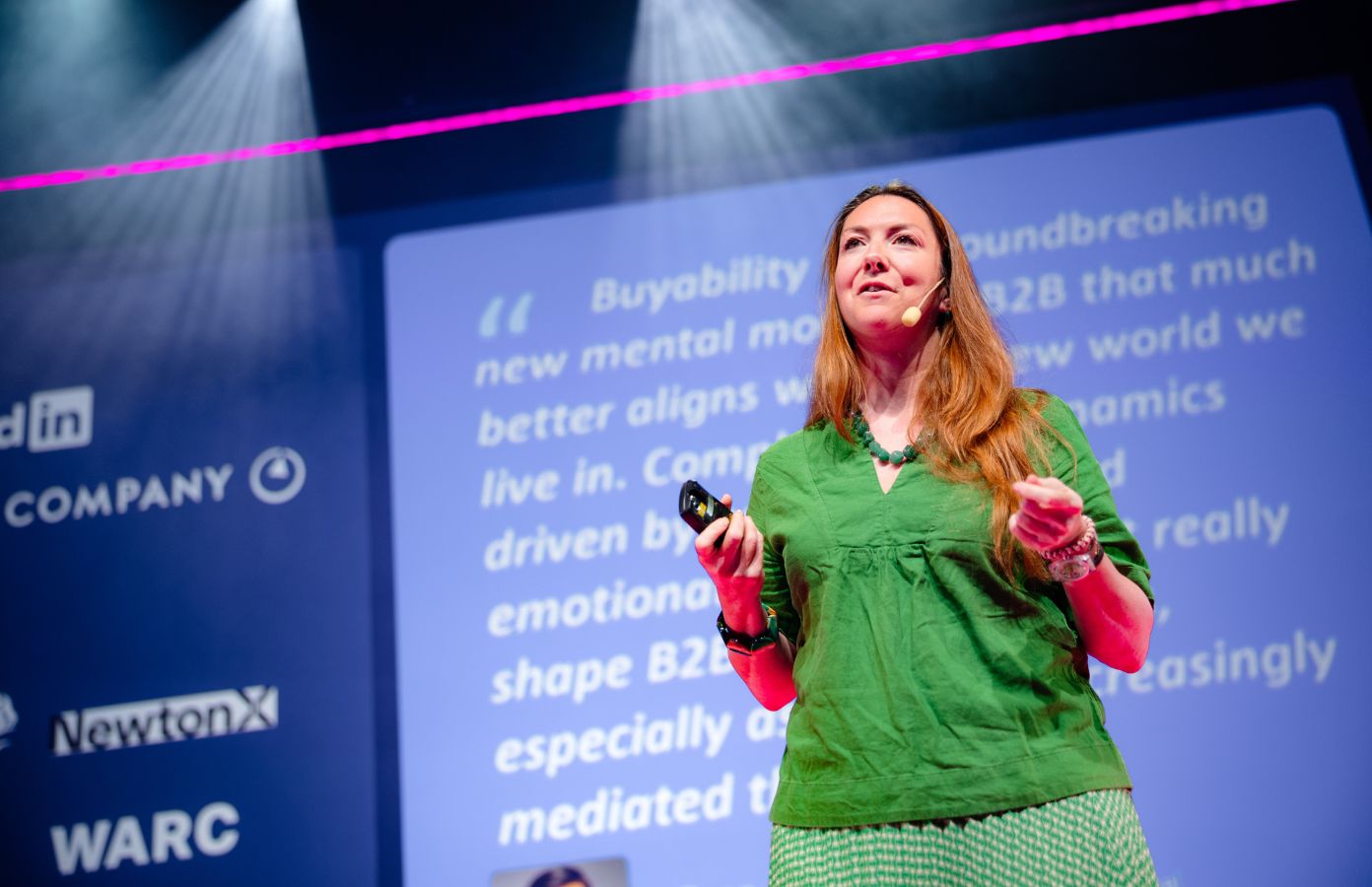
At SaaSiest 2026, Jennifer Shaw-Sweet, Global Practice Lead at the LinkedIn B2B Institute, argued that marketing’s job is no longer just creating awareness. In an AI-mediated buying journey, the real objective is creating buyability – the confidence that makes an entire buying group comfortable choosing you.
It’s a subtle shift in language.
It’s a much bigger shift in strategy.
Buyers Are Researching Without You
One statistic from the session captures why this matters.
Around 80% of the B2B buying journey now happens before a prospect speaks to sales. Buyers research independently, compare options, and increasingly use AI tools to navigate that process.
That means marketing is no longer warming up leads for sales.
Marketing is shaping decisions while nobody from your company is in the room.
If your brand isn’t creating confidence during that invisible part of the journey, sales inherits a much harder conversation later.
B2B Decisions Are Group Decisions
Another reason traditional marketing metrics fall short is that they often treat buying as an individual action.
B2B purchases rarely work that way.
A champion may love your product, but finance, IT, procurement, and leadership all need enough confidence to support the decision. Jennifer argued that this collective confidence is what buyability measures – not whether one person clicked an ad, but whether an organisation feels safe buying from you.
That changes what success looks like.
Instead of asking, “Did we generate awareness?” the better question becomes, “Did we make the buying group more confident?”
AI Is Rewarding Consistency
Large language models introduce another twist.
They don’t make intuitive leaps the way humans do. They rely on clear, consistent signals about who you are, what you do, and why customers trust you.
That makes disciplined messaging more valuable than ever.
Case studies, customer proof, expert voices, and repeated positioning aren’t just brand assets anymore. They’re the evidence both humans and AI systems use to decide whether your company is credible.
The brands that become easy to understand also become easier to recommend.
Marketing Has to Think Beyond the Champion
One of the most practical examples Jennifer shared came from IBM.
Instead of relying on a single internal advocate, sales deliberately engaged multiple people across the buying committee. Combined with broader brand familiarity, that approach dramatically improved conversion rates.
The lesson is bigger than one company.
Marketing can’t stop at creating one enthusiastic champion. It has to create enough familiarity that several stakeholders independently recognise and trust the brand before the sales conversation even begins.
Buyability Is a Business Metric
Perhaps the most important implication of Jennifer’s framework is organisational.
If marketing can demonstrate that it increases the confidence of future buying groups, it stops being measured only by leads and campaigns. It becomes responsible for creating the conditions that make future revenue more likely.
That is a conversation CEOs and CFOs understand.
And it is a much stronger case for investment than awareness alone.
The Best B2B Brands Reduce Risk
Jennifer’s argument wasn’t that brand suddenly matters more than demand generation.
It was that both should serve the same outcome: making it easier for customers to say yes.
In an AI-mediated world, buyers have more information, more options, and more uncertainty than ever. The companies that grow won’t simply be the loudest.
They’ll be the ones that make buying feel like the safest decision.