

Imagine walking into a board meeting as the new CEO of an established SaaS company and telling everyone that the business needs to be reinvented.
Not because revenue is collapsing. Not because customers are leaving. Not because the product has stopped working.
But because everything is going reasonably well.
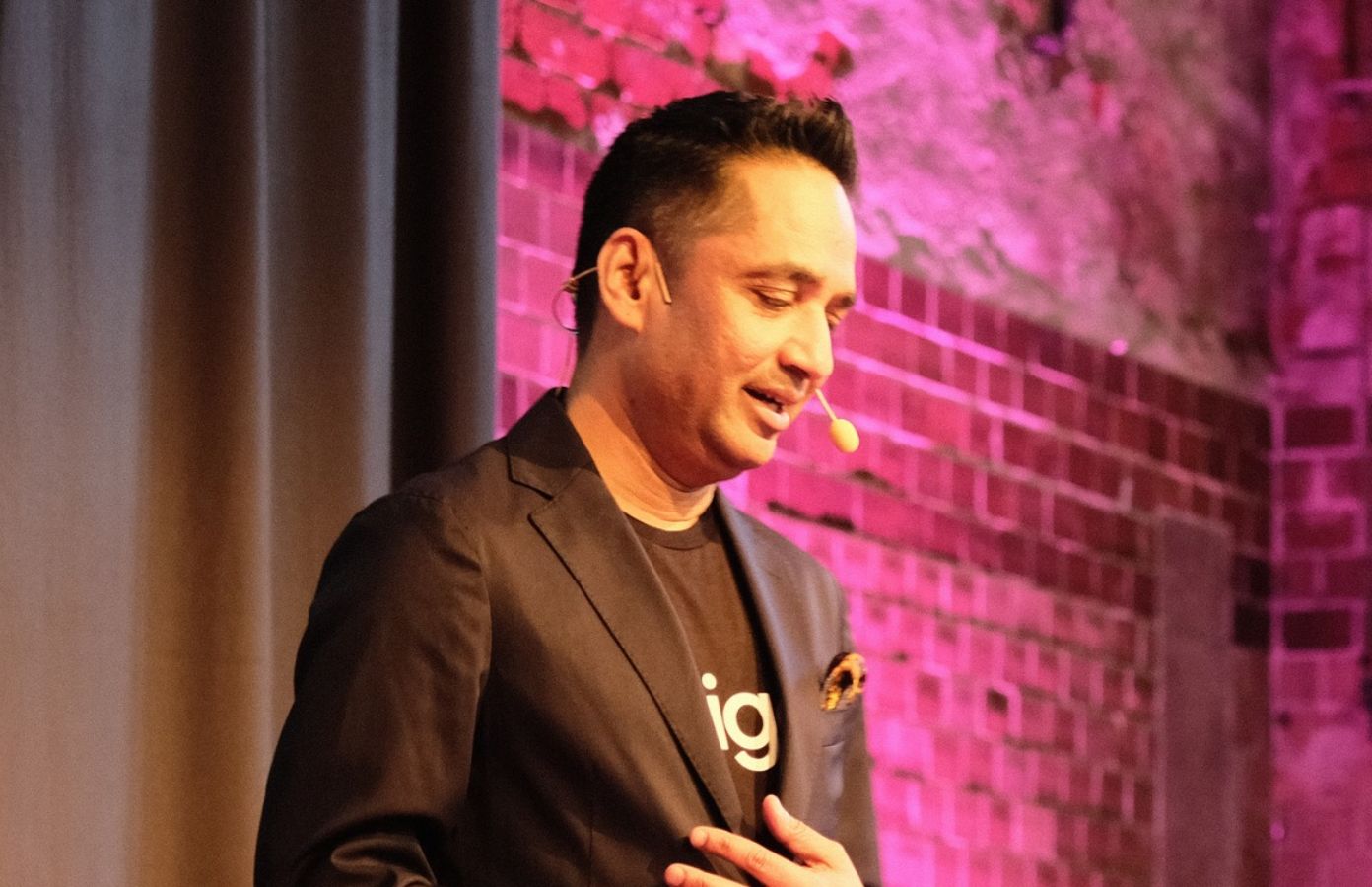
At SaaSiest 2026, Rahul Yadav, CEO of Paligo, described exactly that situation. Five months into his leadership, he was running a company with approximately $11 million in ARR, nearly 500 enterprise customers across 38 countries, a team of 87 people, and a business approaching profitability.
By most traditional SaaS metrics, Paligo was in a healthy position. It had spent a decade building a successful product, established a loyal customer base and created a strong foundation for continued growth.
Yet Rahul’s message to the board was that continuing down the same path wasn’t enough. The company needed to reinvent itself for an AI-native world.
His argument wasn’t that everything Paligo had built was becoming worthless. It was almost the opposite.
The company’s greatest opportunity was hiding inside the assets it had spent ten years accumulating.
The Most Dangerous SaaS Companies Are the Comfortable Ones
When a SaaS business is struggling, the need for change is obvious. Revenue slows, customers churn and investors start asking difficult questions. Leadership has little choice but to respond.
But what happens when the business is still growing?
Rahul argued that this can be an even more dangerous position. A company growing at 10-12% annually, with healthy margins and an established customer base, can convince itself that incremental improvements will be enough.
It can optimise costs, improve profitability, add a few AI features and continue following the playbook that worked for the previous decade. From the outside, everything still looks relatively stable.
The problem is that the market may be changing faster than the company realises.
For Paligo, that meant confronting a fundamental shift in how software creates and captures value. Its traditional model combined a platform fee with seat-based licensing. But as AI agents become capable of performing work previously done by human users, the assumptions behind that model become less certain.
Rahul saw a choice between continuing to optimise the existing business and rebuilding it around a different future.
He chose the latter.
Adding AI Features Isn’t the Same as Becoming AI-Native
One of the easiest responses to AI disruption is also one of the least transformative.
Add AI to the product.
Introduce an assistant. Launch a chatbot. Put AI-powered messaging on the website. Give customers a few new capabilities and tell the market that the company has embraced the technology.
Rahul was particularly critical of this approach.
Established SaaS companies often carry years of technical debt, product complexity and outdated user experiences. Adding AI features on top of those foundations doesn’t necessarily solve the underlying problem. It can simply make an old product look more modern.
The same applies internally. A CEO announces an AI strategy, product teams start experimenting with different ideas, engineers explore new tools and departments begin moving in different directions.
Everyone is doing something with AI, but nobody has agreed on what the company is actually trying to become.
For Rahul, the starting point wasn’t identifying which AI features Paligo should build.
It was going back to first principles and asking why the company existed in the first place.
Your Competitive Advantage Might Be Ten Years Old
Rahul introduced a simple framework borrowed from physics: momentum equals mass multiplied by velocity.
For an established SaaS company, mass represents everything it has already built. Customer relationships, proprietary data, domain expertise, integrations, brand recognition, distribution and years of product knowledge.
Velocity represents how quickly the organisation can redeploy those assets in an AI-native world.
Most established SaaS companies have plenty of mass. What they often lack is velocity.
That distinction matters because the AI conversation tends to focus heavily on speed. Startups can build products faster, launch with smaller teams and experiment without the constraints of legacy architecture.
But established companies have something those startups don’t: years of accumulated advantages.
The challenge is recognising which of those advantages will remain valuable when the way customers use software fundamentally changes.
At Paligo, Rahul and his team started examining what the company had spent the previous decade becoming exceptionally good at.
The answer wasn’t simply technical documentation software.
It was structured information.
The Real AI Moat Is Structured Truth
Paligo operates in the content component management system category. Its platform helps organisations create, manage, reuse, translate and publish complex content across multiple products, languages and channels.
Historically, that capability has been valuable because large enterprises need reliable ways to manage technical documentation and product information.
But Rahul began looking at it through a different lens.
AI agents need more than access to information. They need information they can trust.
If an agent is expected to take meaningful action, it must understand which information is correct, where that information came from, how it relates to other information and whether it can be relied upon.
That requires structure, provenance, governance and traceability.
Paligo had spent ten years building technology around exactly those problems.
Rahul shared that the platform manages more than 1.4 billion words under governance and over three million topics and content components. Its structured content architecture, based on standards such as DocBook XML, preserves relationships and context that become increasingly important when information is consumed by AI systems rather than only by humans.
What had previously been understood as infrastructure for technical writers suddenly looked like something much bigger.
A foundation for trustworthy enterprise AI.
The company’s competitive advantage hadn’t appeared overnight because of a new AI model. It had been accumulating for a decade.
AI simply changed what that advantage could become.
Stop Thinking About the Product You Sell Today
Once Paligo had identified its potential moat, Rahul challenged the organisation to rethink three fundamental questions.
Who is the customer? What is the product? And what category does the company actually belong in?
For years, Paligo’s primary users had been technical writers. They created and maintained complex documentation, helping enterprises organise information that other employees and customers needed.
But in an AI-native organisation, Rahul believes those people could take on a much more strategic role.
Instead of simply producing documentation for human readers, they could become content orchestrators responsible for the trusted information that powers AI agents across the business.
That changes the product’s purpose.
Paligo would no longer focus exclusively on helping people author and publish content. It would also help organisations ingest, structure, govern and deliver information to AI systems that need reliable context to perform work.
And that changes the category.
Rather than remaining a specialised documentation tool, Rahul wants Paligo to become what he calls a “Structured Truth Layer for Enterprise AI.”
The ambition is to move from a system of record towards infrastructure that enables systems of action.
It’s a much larger proposition than adding AI functionality to an existing editor.
Reinvention Requires Changing How the Company Works
A compelling strategy is only useful if the organisation can execute it.
That’s where the second half of Rahul’s momentum framework becomes important: velocity.
Paligo didn’t limit its transformation to product positioning. It also began changing how work gets done across the company.
One example came from its go-to-market organisation.
Rahul described how Leah, previously a business development representative, transitioned into a go-to-market engineering role. Instead of operating within a conventional team of five BDRs, she began working with AI agents responsible for parts of the qualification and outreach process.
One agent focuses on converting marketing-qualified leads into sales-qualified leads. Another operates at the top of the funnel, handling conversations and qualification.
Rahul reported that the system had already generated around 300 customer conversations and booked 15 meetings. Meanwhile, other members of the original BDR team moved into account executive roles, focusing on closing business rather than performing the same repetitive prospecting tasks.
The point wasn’t simply to reduce headcount.
It was to redesign the workflow around what humans and AI are each best positioned to do.
The same thinking appeared in engineering.
Paligo established a separate team called Paligo Labs, led by its VP of Engineering, with five people working in an AI-native development environment. Rather than forcing every experiment through the company’s existing engineering processes, the team was given a different way of building and shipping.
Rahul described an ambition for that small team to achieve the output traditionally associated with a much larger engineering organisation.
The actual long-term results remain to be seen, but the organisational decision is significant.
Paligo wasn’t waiting for its existing operating model to gradually adapt to AI.
It was creating new ways of working alongside it.
Becoming AI-Native Is a Leadership Decision
Rahul also described changes to Paligo’s culture, hiring criteria and internal systems.
The company began placing greater emphasis on qualities such as judgement, curiosity, speed, clarity and the ability to orchestrate work across people and AI agents.
Those qualities reflect a different understanding of what makes an employee valuable.
In a traditional SaaS organisation, productivity often depends on how efficiently people execute established processes. In an AI-native organisation, more of that execution can be delegated to software.
The human contribution increasingly shifts towards deciding what should be built, evaluating outcomes, understanding customers and coordinating complex systems.
That transition cannot be achieved simply by giving everyone access to an AI coding assistant or encouraging employees to experiment with prompts.
It requires leadership to rethink roles, incentives, expectations and the way teams are organised.
And it requires making those changes before the existing business model forces the company’s hand.
The Future Belongs to Companies That Can Combine Mass With Velocity
There is an understandable fear among established SaaS companies that AI gives new competitors an overwhelming advantage.
Startups can build quickly. They don’t have legacy products to maintain. They can design their architecture, pricing and workflows around AI from day one.
But Rahul’s argument offers a different perspective.
Established SaaS companies aren’t necessarily starting from behind.
They may already possess the data, customer relationships, integrations, domain expertise and trusted infrastructure that AI-native competitors will spend years trying to recreate.
What they cannot afford is to keep using those advantages in exactly the same way.
Paligo’s transformation is still underway, and its long-term success is far from guaranteed. But the strategic lesson is already clear.
The question for established SaaS leaders isn’t simply how to add AI to their existing products.
It’s what their accumulated assets could become if they were building the company from scratch today.
Because the biggest AI opportunity may not be something you need to invent.
It may be something you’ve spent the last ten years building without realising what it could become.